
The Late Night Text
My phone lit up one night in December 2015.
"I have an idea for an app. Will you design it for me?"
I rolled my eyes. I had just settled into a new product design job a few months earlier, and my mom was always coming up with ambitious ideas. This was probably the fifth time she'd asked.
"Ok, I'll bite. What if I came out around Christmas and we talked about it?"
In January 2016, I started a software company with my mom.
She was an emergency veterinarian running a hospital in Northern Arizona. I was a young designer in Southern California. Neither of us had any idea what we were getting into.
The Problem Beneath the App Idea
She wasn't really pitching me an app. She was pointing to a systemic problem in veterinary medicine.
- Records were scattered and unreliable
- Vets were weeks behind on paperwork
- Practices were bleeding money through missed charges
- Work life balance was nonexistent
Veterinarians were burning out in a profession with one of the highest suicide rates of any occupation. We wanted to change that.
Our motto became: Vets deserve joy.
From Whiteboard to Company
The early days were scrappy. I'd drive eight hours from Southern California to Prescott, Arizona, to sit at my mom's dining room table. We'd brainstorm on a giant notepad, sketching out what a better system could look like.
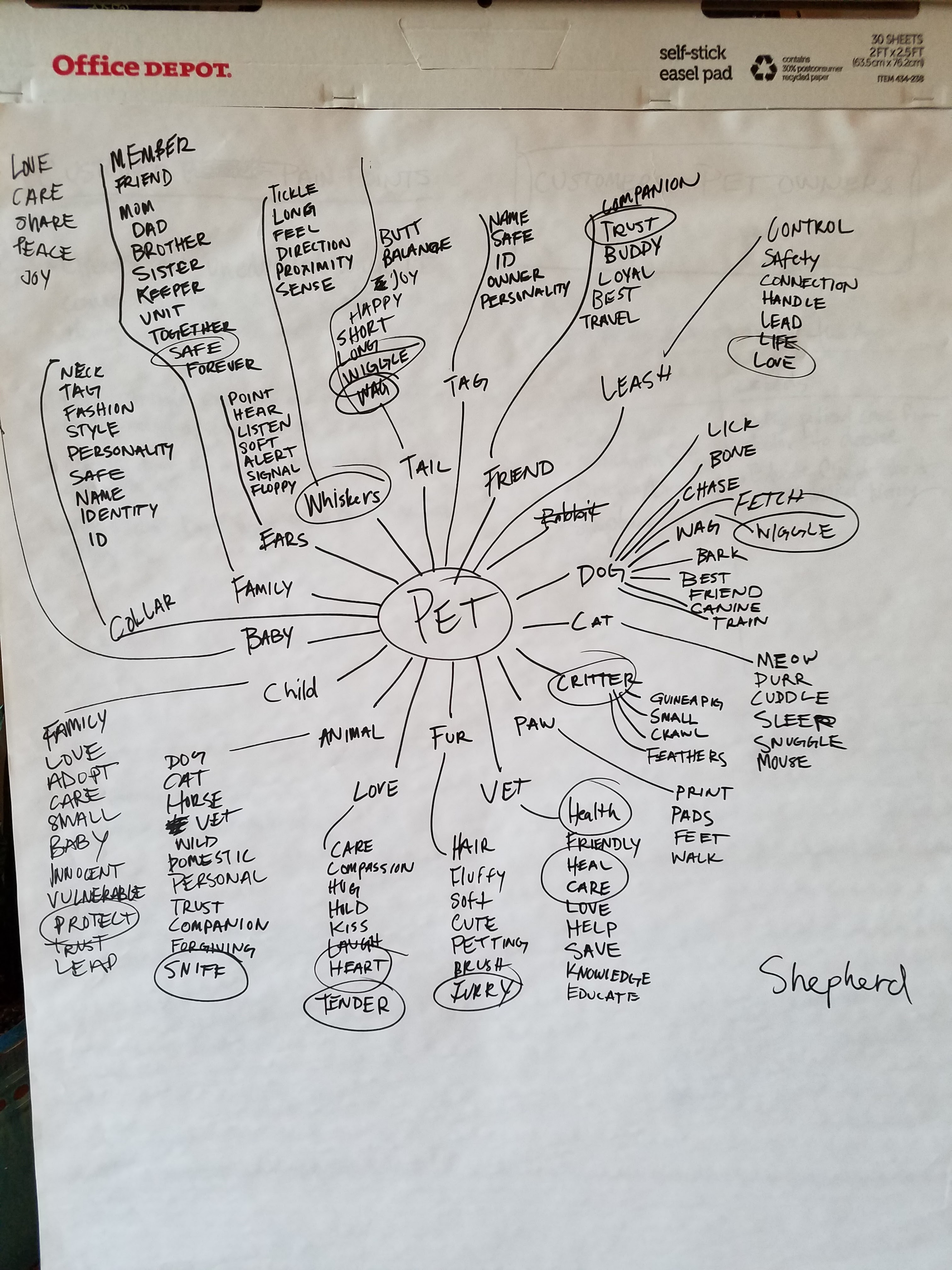
Naming the company mattered to us. We didn't want another "pet" or "vet" brand. We wanted something rooted in values, something that spoke to guiding and helping. We covered an easel pad in word associations radiating out from "Pet," circling the ones that felt right. When I wrote Shepherd on the board, we both knew it was it. It spoke to animals. It reflected our faith. It captured what we were trying to do.
That night, I stayed up designing a logo. The next day, we registered as a business. Suddenly it was real.
Building the Product
We built the medical record first, because it drives everything else in a practice: billing, follow ups, treatments, prescriptions. Most systems at the time treated records like glorified Word docs.
We designed around SOAP, the gold standard workflow in veterinary medicine (Subjective, Objective, Assessment, Plan), and made it possible for vets, techs, and front desk staff to work in the same record simultaneously.
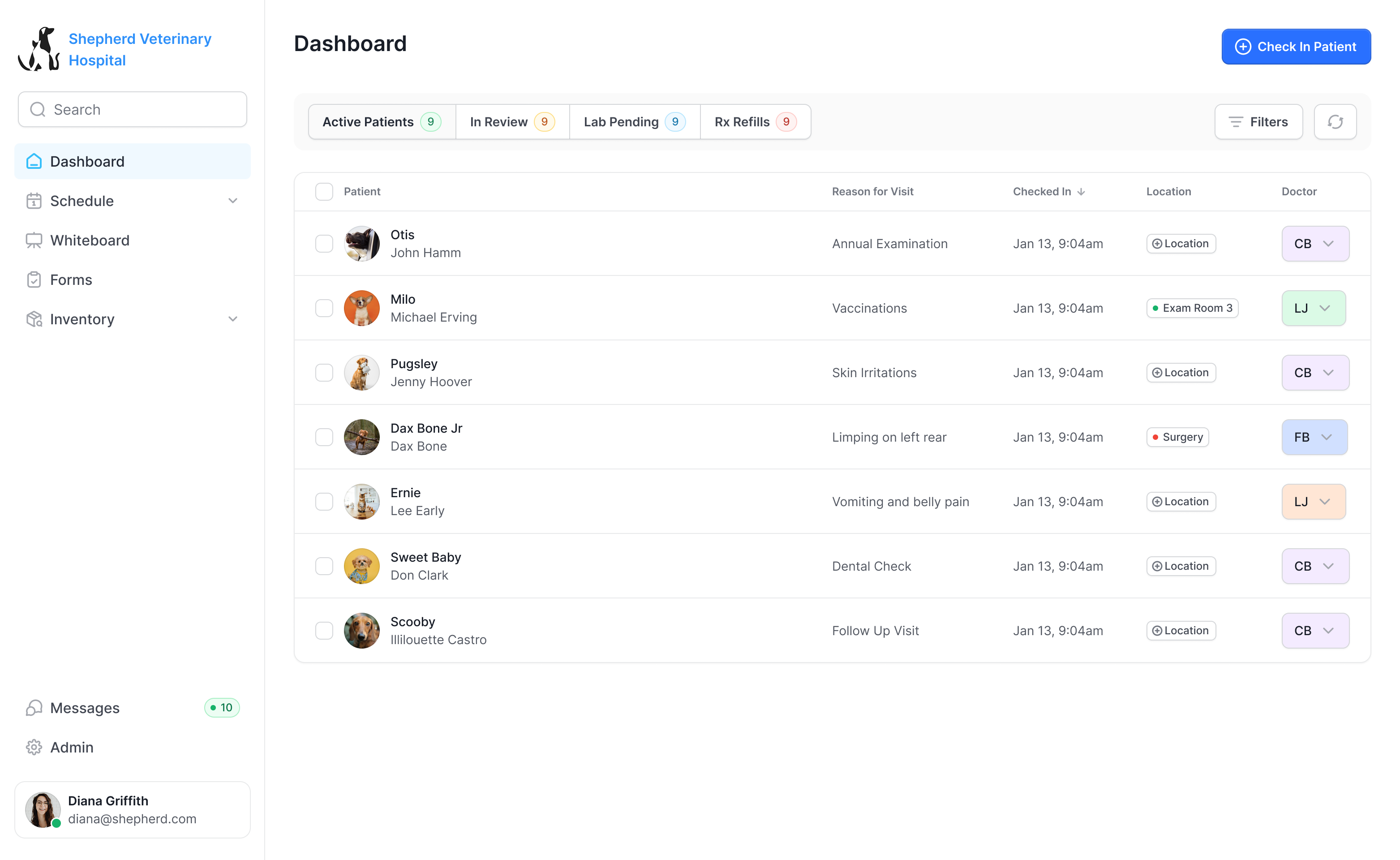
Dashboard
We had to be opinionated. Customers frequently asked for features outside our lane: payroll, timecards, accounting. We listened, thanked them, and said no. Other systems tried to do everything and ended up doing nothing well. Shepherd was built to do one thing exceptionally: get your medical records completed on time.
Surviving Day One
The MVP was rough. It only supported a single hospital and lacked critical features. But it was just enough to test.
Our first guinea pig was my mom's practice. She walked in one morning and told the staff: "From now on, we're using Shepherd."
My phone rang constantly that day as issues surfaced. I was young, newly married, still a full time student, and now on call for a whole hospital running on software I'd built. But they survived day one. That was the moment I knew we had something worth seeing through.
Scaling With Empathy
We poured resources into conferences and industry events. I personally traveled the country, selling practices, onboarding staff, troubleshooting in real time.
The sales cycle was long. Switching a hospital's system is like replacing the engine on a moving car. Winning over a practice meant convincing not just the owner, but the entire staff.
Our secret weapon was support. We hired veterinary technicians as account managers, many from my mom's original hospital. They had lived the pain of switching. They understood the work intimately. We embedded live chat directly into the app and guaranteed responses in under two minutes.
That combination of empathy and focus is what scaled us. When we hit 100 practices nationwide, it felt like a turning point. Shepherd wasn't just a project anymore. It was real.
The Hardest Season
Despite the growth, bootstrapping could only take us so far. By early 2019, we had run out of money. I had pitched investors countless times. My wife was seven months pregnant with our second child. I felt the tension between providing for my family and keeping Shepherd alive.
On March 1, 2019, Shepherd was acquired.
On that same day, my son was born.
I signed the acquisition papers while my wife was in labor. Relief, pride, grief, and joy, all colliding in the same room on the same afternoon.
What I'm Proud Of
Shepherd is still running today with the same DNA we built into it. The motto "Vets deserve joy" still shapes its culture and product. They still hire vet techs for support. They still center the SOAP record.
That's what I'm most proud of. We didn't compromise our values to grow, or to exit. Shepherd remains one of the most authentic tools in the industry, and I mean that in the most genuine way I can.
What I Learned
If I could do it over, I'd go slower in some ways and faster in others. Slower in hiring. Slower in chasing the entire industry at once. Faster in prototyping and validating ideas early.
The biggest design leadership lesson: empathy is essential, but so is focus. Customers will always ask for more. If you build everything, you end up with nothing that works well. The job is to understand their problems deeply, then deliver a clear, opinionated solution.
Shepherd was my crash course in what it means to lead with conviction. It taught me how to hold a vision under pressure, how to build a team that cares, and how to ship something that actually makes life better for people.
It was the hardest, most rewarding chapter of my career so far. And it built the foundation for how I approach design leadership today.