
The Problem
When I stepped into my role at IPG, I quickly noticed something was missing. I had an extremely talented team willing to put in the work, but our alignment on what mattered in our design decisions was murky.
The team was growing, but the environment wasn't naturally collaborative. Developers and product managers weren't engaged in the design process, not out of hostility but because there was no shared language or shared investment. Design decisions stalled in back and forth with no agreement on what "good" looked like or why one direction was better than another.
That friction wasn't just slowing us down. It was holding back the quality of the work.
The Need for a Framework
We couldn't keep making decisions ad hoc and hoping for alignment. I needed a framework that could explain why we were making the choices we were making, something that grounded our perspective and gave other teams a way to engage with it.
Not fluffy values to slap on a slide. Real, working principles that could reduce ambiguity, accelerate decisions, and give us clarity under pressure.
How We Built Them
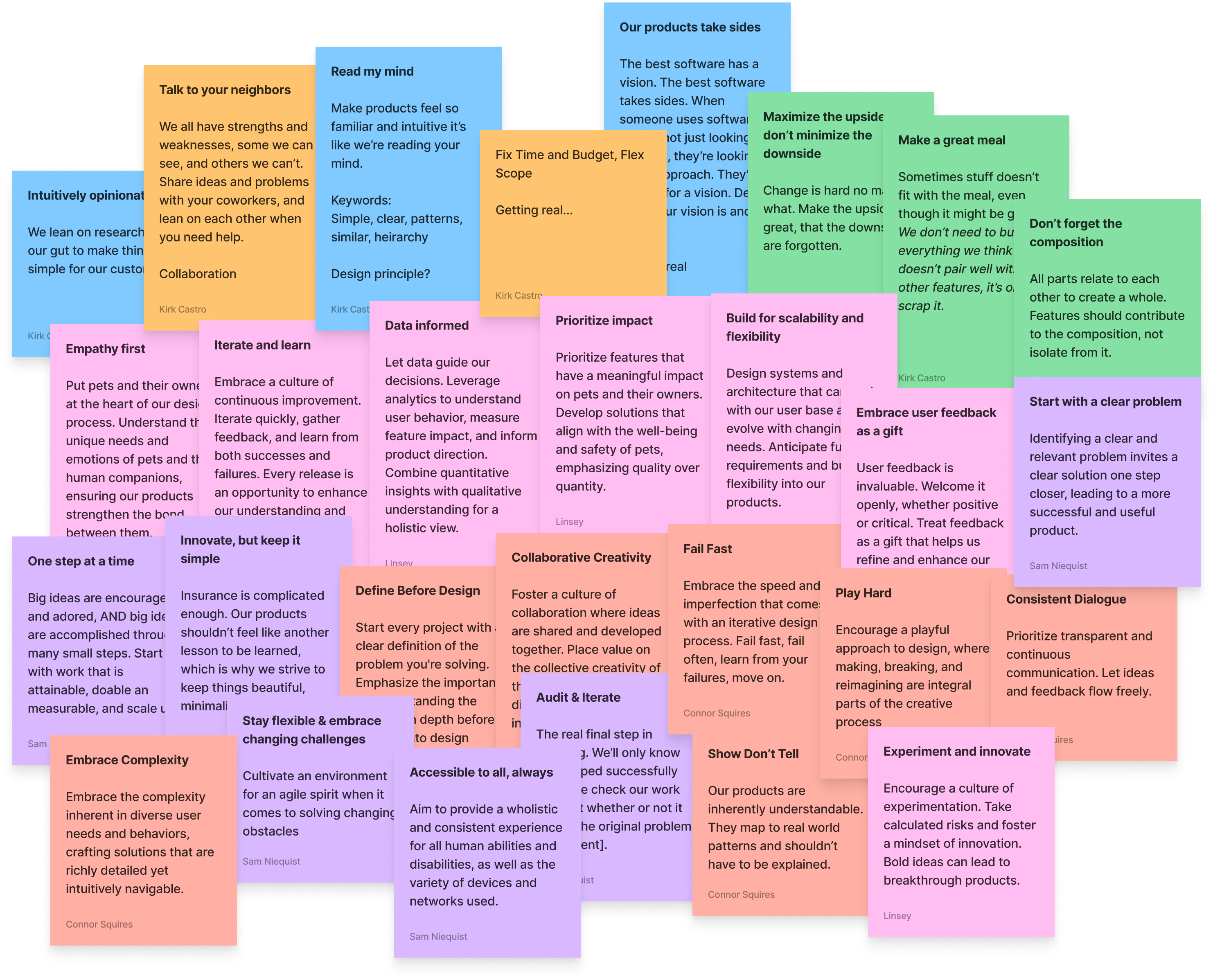
I hosted a workshop with the team. We looked at companies with a strong design point of view, Slack and Airbnb among them, and talked about what made their products feel cohesive and intentional.
Then we turned the lens inward:
- What do we care about as designers?
- What values already show up in our best work?
- Where do we consistently face friction or tradeoffs?
It was a wrestling match. We brainstormed, argued, grouped themes, ranked ideas, killed darlings. It was honest and energizing. By the end, clear threads had emerged.
The Principles
We landed on five working principles that now guide every major design decision:
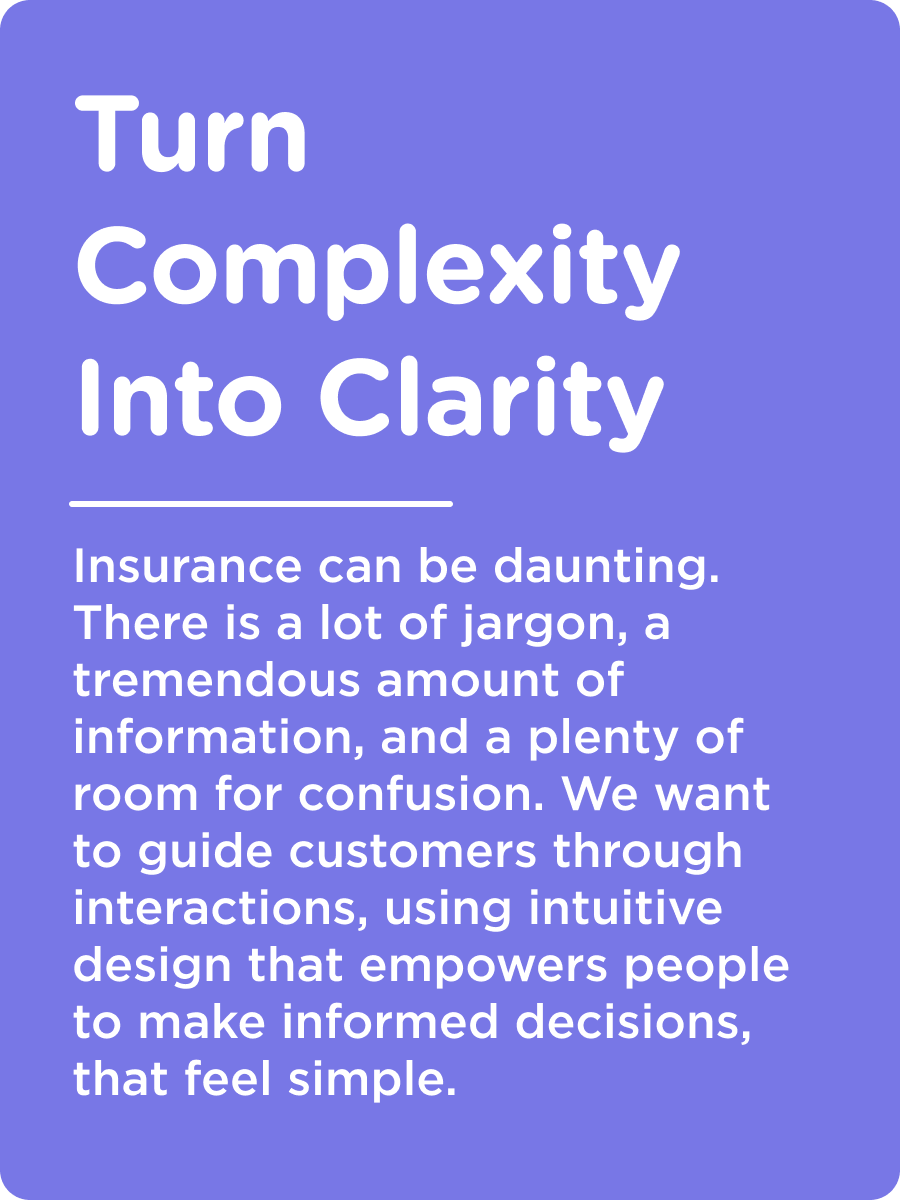
- Turn Complexity Into Clarity. Insurance is daunting, full of jargon and room for confusion. Guide customers with intuitive design that empowers informed decisions and feels simple.
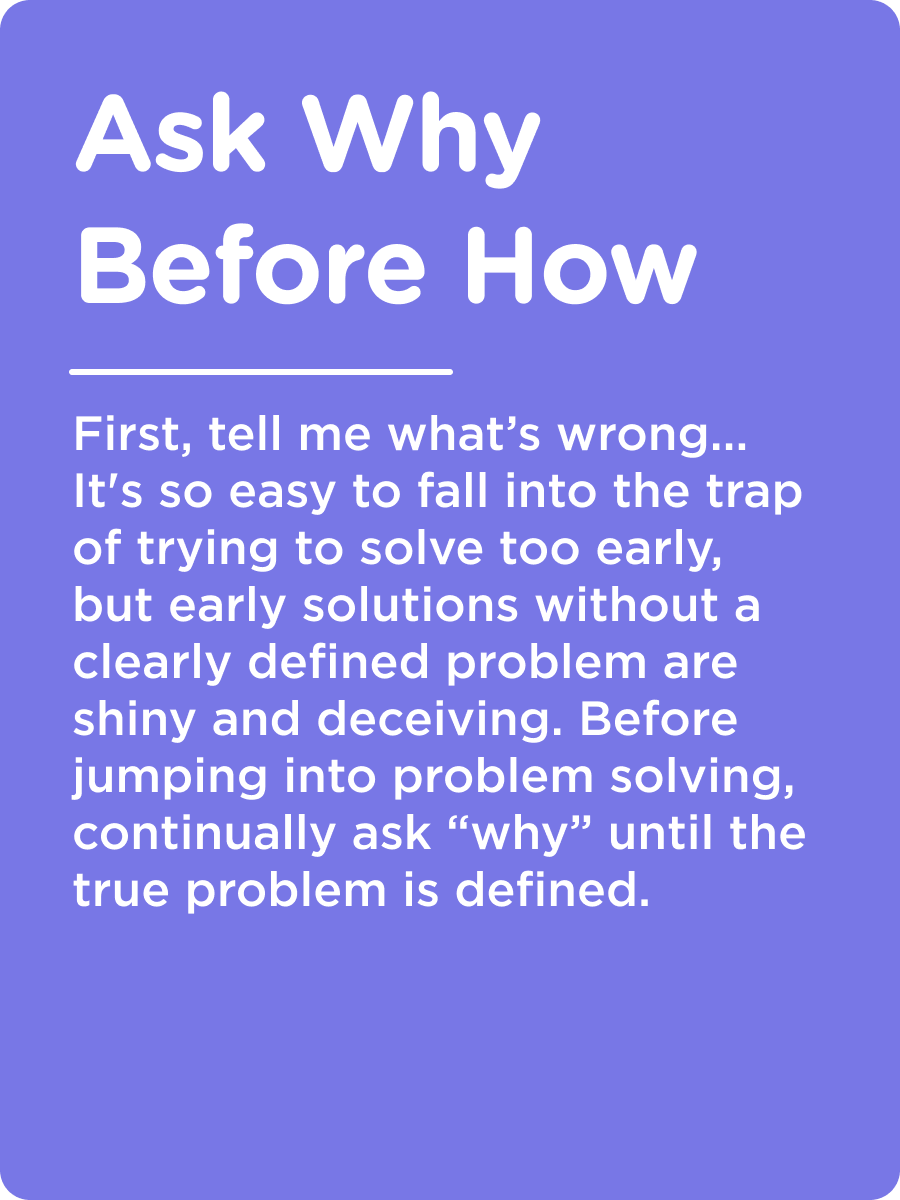
- Ask Why Before How. Early solutions without a clearly defined problem are shiny and deceiving. Keep asking why until the true problem is defined.
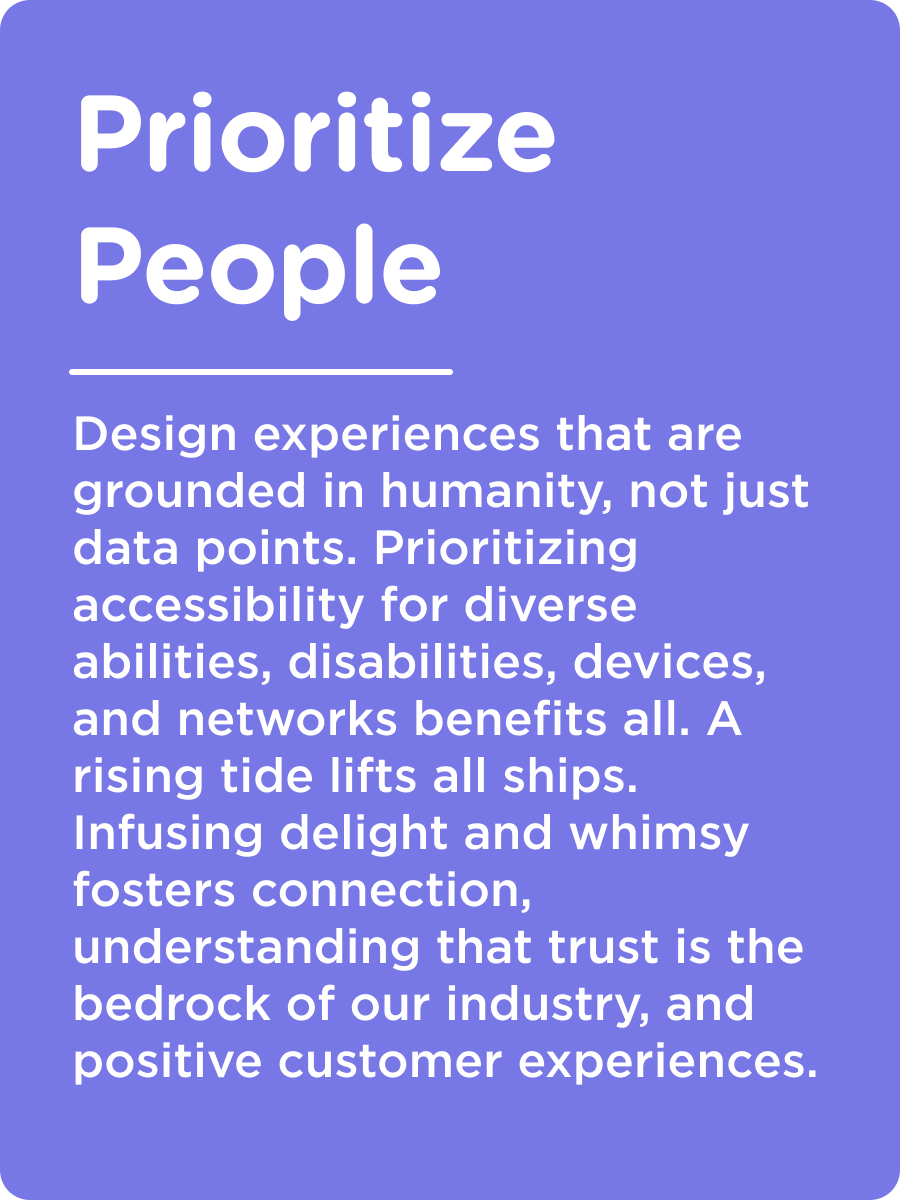
- Prioritize People. Design experiences grounded in humanity, not just data points. Prioritizing accessibility benefits everyone, and trust is the bedrock of our industry.
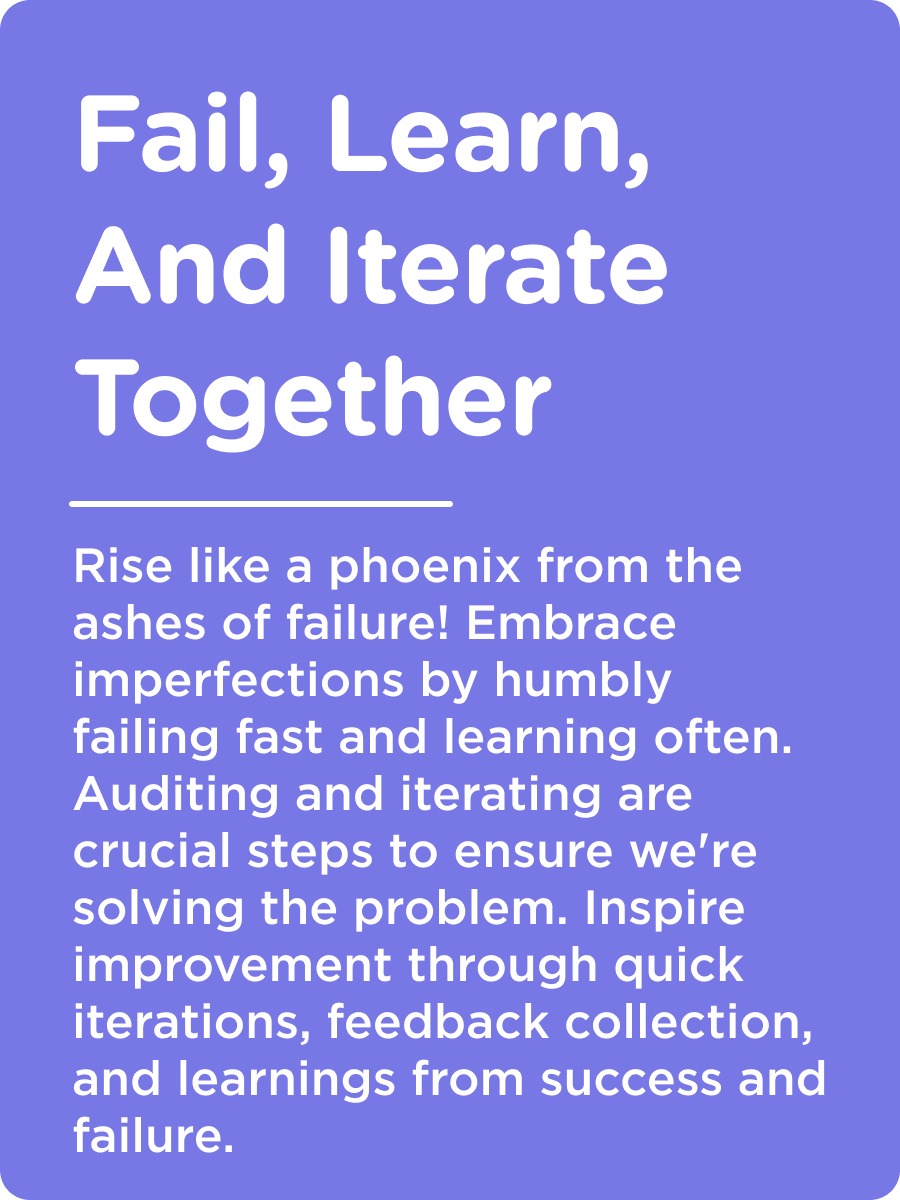
- Fail, Learn, And Iterate Together. Embrace imperfection by failing fast and learning often. Quick iterations, feedback, and learnings from both success and failure inspire improvement.
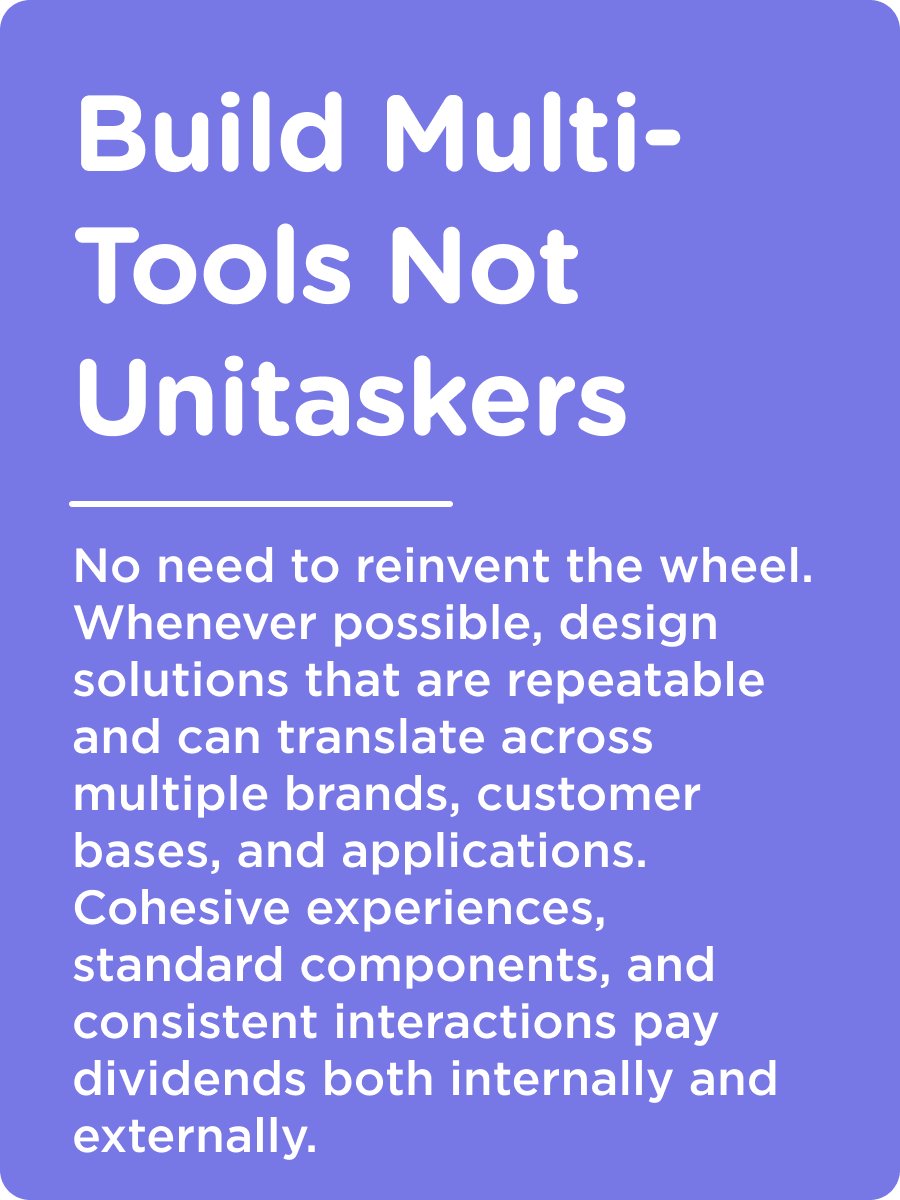
- Build Multi-Tools Not Unitaskers. No need to reinvent the wheel. Design repeatable solutions that translate across brands, customer bases, and applications.
These aren't abstract ideals. They're decision making tools, the kind you can pull out in a critique to cut through opinion driven debate.
What They Do for Us Now
The principles made our work better and easier:
- Faster critiques. We don't waste time debating personal preference.
- Better cross functional collaboration. We can clearly articulate the "why" behind decisions.
- Smarter tradeoffs. We agree on what's worth compromising on, and what isn't.
And perhaps most importantly: these principles don't belong to design anymore. Product managers use them to scope features. Engineers reference them when weighing technical options. The principles gave us a shared lens and, with it, a stronger sense of collective ownership over the quality of what we build.
Why This Matters
Design systems help you move faster. Product principles help you move with purpose.
In any cross functional team, it's easy to get stuck in ambiguity or drift into opinion wars. When you've done the work to define what matters, you can spend your energy solving problems instead of defending instincts.
That's what our principles gave us. Not just alignment. Momentum.